Site Preparation & Grading
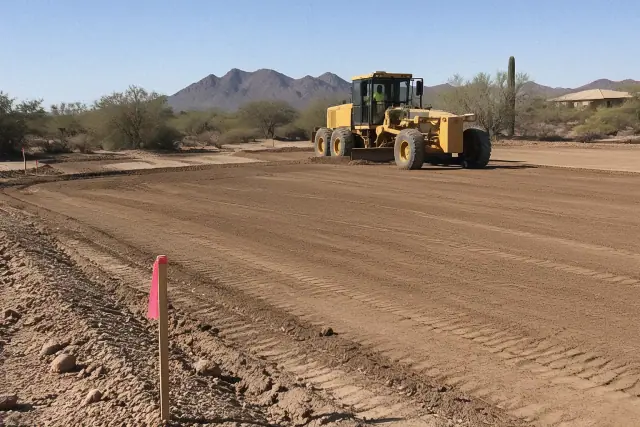
We strip topsoil, rough-grade the site, compact subgrade, and finish elevations to the project plan. Laser and GPS-guided equipment help control pad heights, slopes, and driveway grades.
Explore Service
Mesa Excavation Co. provides site preparation and grading for residential and commercial properties in Apache Junction, AZ. We clear desert lots, trench for utilities, and excavate foundations and building pads. Our earthwork services also cover pool excavation, pool and concrete removal, drainage excavation, hauling, and hydro excavation.
Rocky soil and caliche can change the scope of a dig before a foundation crew arrives. Monsoon runoff also makes slope and drainage planning essential on lots near the Superstition foothills. We assess soil, access, utilities, and your plans before quoting the work. Contact us to discuss the ground conditions and next steps for your property.
From residential lots near Idaho Road and Ironwood Drive to commercial parcels along US-60, we plan equipment and hauling around the job. Our East Valley coverage includes Gold Canyon, Mesa, Queen Creek, Gilbert, and Florence in Pinal and Maricopa counties.
Prepare a new lot, make room for a pool, or correct drainage on an existing property with a scope matched to your site. We coordinate clearing, excavation, grading, and material movement so the work supports your construction plans.
We strip topsoil, rough-grade the site, compact subgrade, and finish elevations to the project plan. Laser and GPS-guided equipment help control pad heights, slopes, and driveway grades.
Explore Service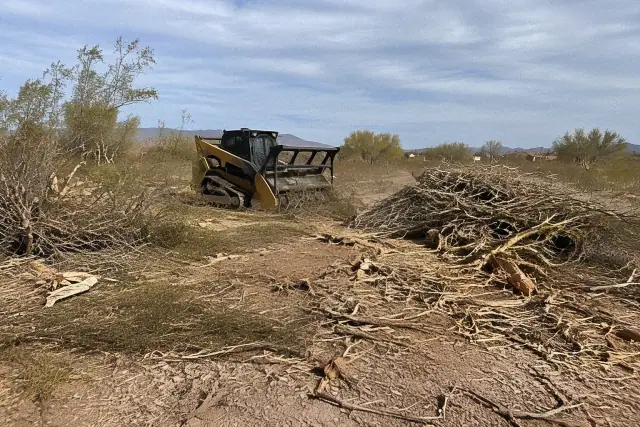
Palo verde, creosote, cholla, and buried roots can stand between a desert lot and a buildable pad. We clear vegetation, grub root systems, remove obstructing rock, and haul clearing debris off site.
Explore Service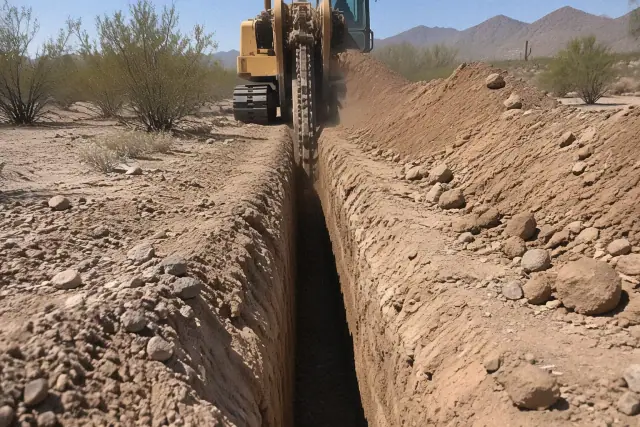
We excavate trenches for water, sewer, electrical, and gas lines, starting with Arizona 811 utility locating. Depth, slope, and bedding follow the project requirements, with hydro excavation available near existing utilities.
Explore Service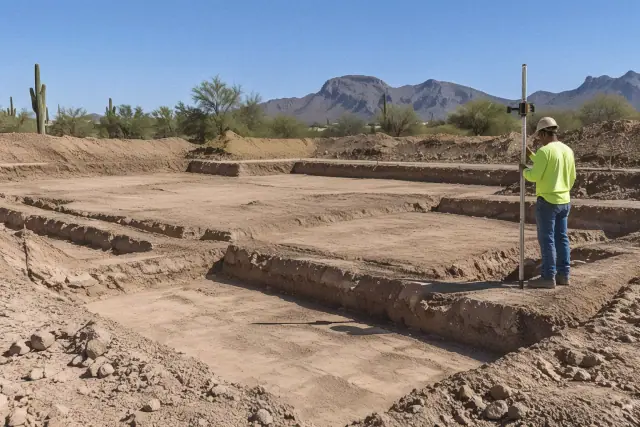
Footings, stem walls, and building pads need accurate dimensions and a stable subgrade. We excavate to engineered plans, check soil bearing requirements, and coordinate pad preparation with your builder's schedule.
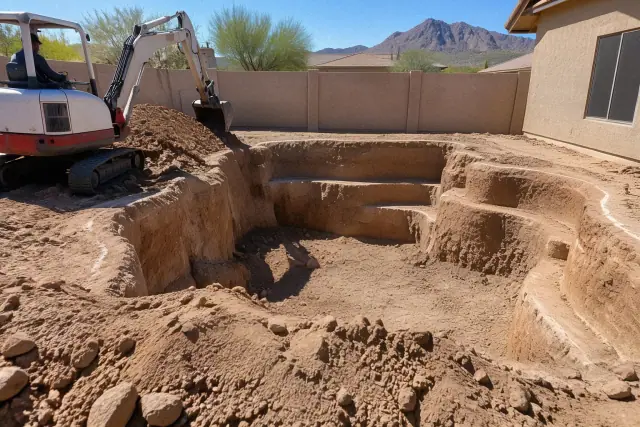
We dig pool areas to shell dimensions with allowances for gunite or shotcrete. The excavation plan accounts for existing block walls, hardscape, and irrigation lines, plus breaking equipment where rocky ground demands it.
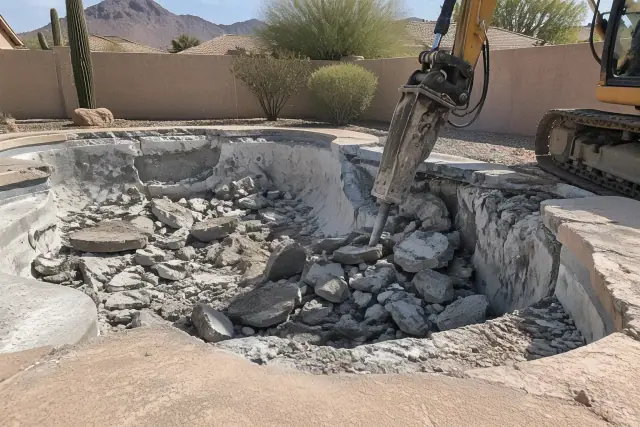
An old pool can make way for a different use of the yard. We handle pool demolition and removal, then backfill and compact the excavation for the planned use of the property.
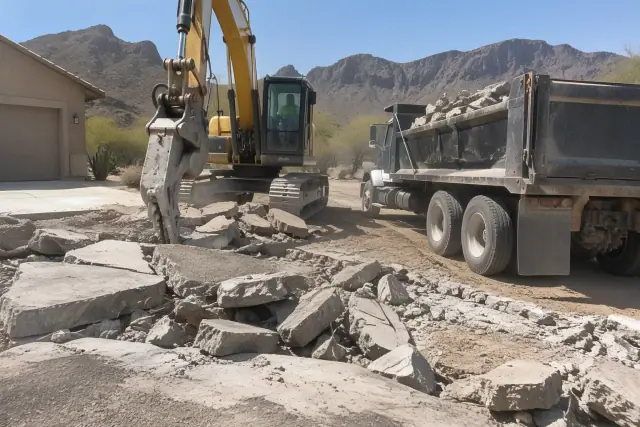
We handle concrete demolition and removal as part of site work for residential and commercial properties. Debris hauling is planned around the material type and load volume so the next stage of work has a clear work area.
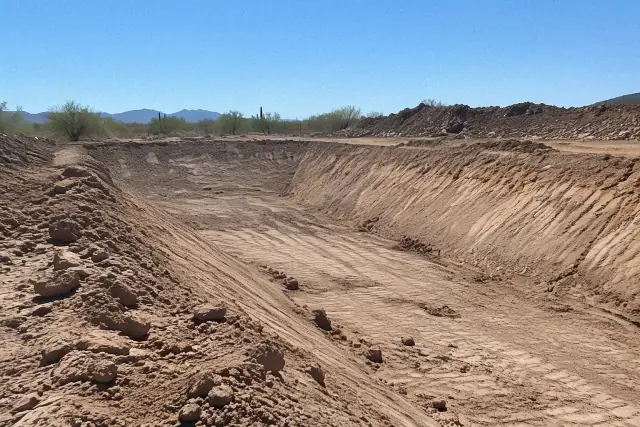
Retention basins, swales, and drainage channels give stormwater a planned route through a property. We excavate these features to the drainage plan, with particular attention to sloped lots near the Superstition Mountains.
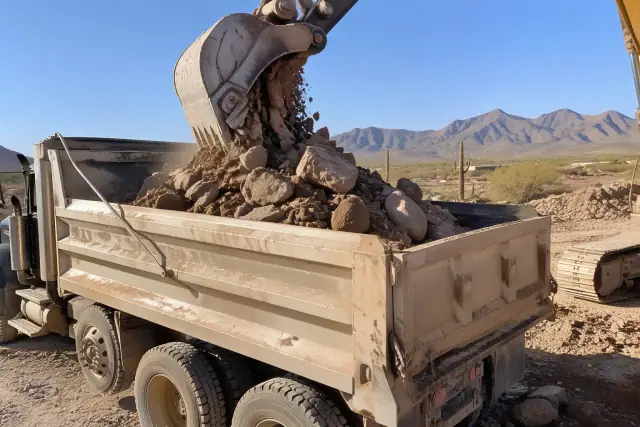
Remove spoil from a foundation dig or bring structural fill to a low pad. We coordinate dump truck loads with the grading plan and move dirt, rock, and demolition debris according to volume and material type.
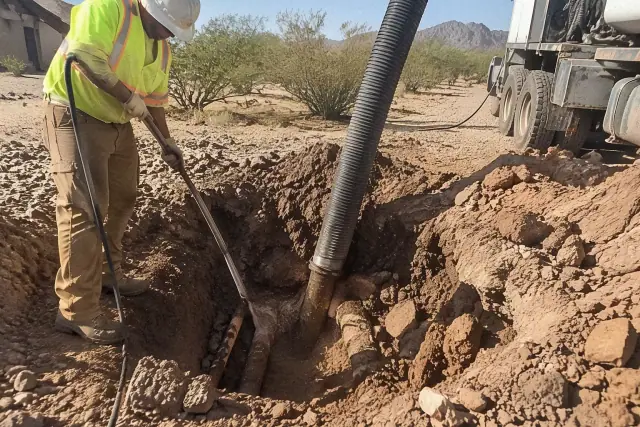
Pressurized water and vacuum equipment remove soil in controlled layers around known or suspected utilities. This approach supports precise excavation in tight spaces and developed areas where nearby hardscape or landscaping needs protection.
A useful excavation estimate starts with what the finished site must support. Match the scope to your plans, soil, drainage, equipment access, and material needs before comparing bids.
A new home, pool, driveway, and commercial building each require different excavation dimensions and finished grades. We compare architectural or civil plans with field conditions so clearing, trenching, and pad work fit the intended build.
A lot that reaches caliche at two feet can need a different digging approach from one that reaches it at six. Assessing the ground first helps identify when ripping attachments or breaking equipment belong in the scope.
Finished slopes should direct stormwater away from structures and toward the drainage features shown on the plan. Consider swales, channels, or retention excavation before setting pad elevations.
Existing block walls, hardscape, and irrigation lines affect how equipment reaches a backyard dig. Excavators and skid steers should be sized to the work area, with room considered for spoil removal and deliveries.
A low pad may require structural fill while another part of the property produces surplus soil. Coordinate material quantities with the grading plan so hauling supports the work without unnecessary trips.
Building pads and industrial equipment areas need subgrade prepared to the engineered density requirements. Include compaction in lifts and the specified testing in the scope before foundation work begins.
Apache Junction ground can shift from sandy desert loam to decomposed granite and hardpan within one lot. Older parcels near the Apache Trail and Old West Highway junction can add buried lines and other subsurface uncertainty to the job.
Assess My SiteCaliche shelves can be several feet thick and resist a standard excavator bucket. Mechanical breakup or ripping may be needed before excavation and compaction can proceed.
Intense rainfall from June through September can flood an unfinished excavation quickly. On foothill lots, early slope work and planned drainage help keep runoff from collecting around the work area.
Older irrigation lines and incomplete utility records can complicate a dig on an established property. Utility locating and controlled excavation near suspected lines help the crew plan around those conflicts.
Fill placed without the required compaction can settle after construction. Preparing subgrade and checking density in lifts help address that risk before a slab, footing, or equipment pad is built.
Native brush, root systems, and decomposed granite outcroppings can obstruct pad and driveway preparation. Clearing and rock removal need to be included before final grading can establish a usable surface.
Summer temperatures regularly exceed 105 degrees, affecting equipment operation and the timing of related concrete work. Excavation and grading schedules need to account for heat as well as seasonal storms.
Mesa Excavation Co. works across the East Valley on residential and commercial sites. We bring soil assessment, plan review, material coordination, and final grade checks into the same excavation process.
Experience with local caliche, decomposed granite, and rocky foothill lots helps us select an approach for the actual site. We assess each property's conditions instead of treating every parcel as uniform soil.
We work with builders, general contractors, and civil engineers to sequence excavation, utility trenches, and pad preparation. Permit and drainage review needs are identified during planning.
Working relationships with aggregate suppliers, fill providers, and disposal sites across Pinal and Maricopa counties support deliveries and hauling. Material movement is coordinated with the site work schedule.
Each phase prepares the ground for the next trade. We begin with plans and site conditions, complete the required preparation and checks, and document the finished grade.
We walk the property to evaluate soil, slope, vegetation, drainage, and utility locations against your plans. If the project also includes a property in San Tan Valley, AZ , share both addresses so each site can be assessed separately.
We identify permit and drainage review needs with Apache Junction's Development Engineering division. Required approvals and utility locates are addressed before excavation starts.
Vegetation and roots are removed, topsoil is stripped, and the site is rough-graded to planned elevations. Caliche or obstructing rock is addressed as ground conditions require.
Foundation areas, utility trenches, pool excavations, and drainage features are cut to the applicable plans. Subgrade preparation accounts for the soil and the loads the finished area must support.
Fill is compacted in lifts and checked against engineered density requirements. Fine grading establishes the final pad heights and slopes for construction and drainage.
We check pad elevations, compaction results, and drainage flow against the approved plan. Required city inspections and final grade documentation complete the handoff to the next phase.
Case Study 1: New homes and additions: Foundation excavation and compacted building pads establish the elevations needed for slab or stem wall construction. The work is coordinated with the builder's sequence.
Case Study 2: Pool and yard projects: Pool excavation creates room for a new shell, while pool removal and backfilling prepare the area for a different yard layout. Grading considers the landscaping and irrigation that will follow.
Case Study 3: Commercial and industrial sites: Mass grading, foundation excavation, and heavy hauling support larger projects along the US-60 corridor. Equipment pads, parking areas, and access roads are prepared for the loads specified in the project plans.
Tell us your property address, planned work, and any access or drainage concerns. We will review the site conditions and scope, then provide an estimate and a realistic schedule for your project.
These answers cover local ground conditions, project costs, equipment, and the steps involved in preparing a property. Your site's size, access, and plans determine the final scope.
Discuss My ProjectApache Junction offers access to the Superstition Mountains and Tonto National Forest with a small-town setting and a population around 38,499. Summer heat, limited public transit, and distance from downtown Phoenix are practical considerations. For property improvements, rocky soil and caliche also make excavation and grading more demanding than on softer valley ground.
Apache Junction falls primarily in USDA Plant Hardiness Zone 9b, with some lower-lying pockets in zone 10a. Plant choices and irrigation plans matter when preparing a yard, so finished grades should account for the landscaping that will follow.
Material purchases can involve Arizona state, county, and city tax components, which can affect the cost of a construction project. Property taxes are separate from purchase taxes and relate to assessed property value; they should not be treated as the same project cost.
A typical residential site preparation and grading job can take two days to two weeks, depending on lot size, ground conditions, and scope. Extensive clearing or significant caliche can lengthen the work, while larger projects with multiple grading phases can extend to several weeks. We establish the schedule after assessing the site.
The equipment mix can include excavators, skid steers, motor graders, compactors, and water trucks for dust control. Laser or GPS guidance supports accurate elevations. Rocky lots may also require ripping attachments or hydraulic breakers before material can be graded.
Permit needs depend on the planned construction, amount of land disturbance, and drainage changes. We identify review needs during the site assessment and coordinate with the city's Development Engineering division. Addressing those requirements before work begins helps keep the excavation aligned with the approved plans.
Typical residential site preparation generally ranges from roughly $1,300 to $5,600, depending on lot size and soil conditions. Professional grading averages $0.40 to $2.00 per square foot, while land clearing typically runs $5,000 to $11,000 per acre depending on vegetation density and terrain. Caliche breaking, extensive hauling, and drainage work can increase the scope, so we prepare a detailed estimate after reviewing the property.
Hydro excavation uses pressurized water and a vacuum system to remove soil in controlled layers. It is useful near known or suspected utilities, in tight spaces, and around older infrastructure with incomplete records. The approach helps limit disturbance where nearby landscaping or hardscape needs to remain in place.
Yes. We excavate footings, stem walls, and building pads to engineered dimensions and elevations, then prepare and compact the subgrade. We also handle basement excavation where included in the project and coordinate the sequence with your builder.
Yes. Pool demolition and removal can be followed by backfilling and compaction for the property's planned use. The scope should account for future landscaping, grading, or construction so the ground preparation fits what comes next.
Swales, channels, retention basins, and corrected grades can provide planned routes for runoff. We assess the existing slopes and drainage patterns before defining the work. That review is especially useful on foothill lots where stormwater moves quickly during monsoon rains.
Commercial projects can involve mass grading, larger footings, deeper utility trenches, and heavier hauling volumes. Industrial pads and access areas must be prepared for the loads and density requirements in the project plans, with third-party testing when specified. Sequencing with general contractors and civil engineers is part of that work.
Yes. We remove dirt and rock from excavations and bring structural fill to areas that need additional material. Hauling is coordinated with the grading plan, while demolition and clearing debris removal is priced by load and material type.
We verify pad elevations, compaction results, and drainage flow against the approved plan. Required city inspections are coordinated before the work is closed out. Final grade documentation provides a record for future projects such as a pool, addition, or pergola.
We work near Idaho Road, Ironwood Drive, Superstition Vistas, and the neighborhoods bordering Gold Canyon along US-60. Our wider service area includes Mesa, Queen Creek, Gilbert, and Florence across Pinal and Maricopa counties. Contact us with the property address to confirm coverage and discuss access.