Proudly serving Mesa, Gilbert, Chandler, Tempe, Scottsdale, Queen Creek & surrounding areasCall or Text 24/7: 480-210-6373
Stucco homes and saguaro cacti in a suburban Mesa, AZ neighborhood under bright daylight.

Excavation Contractor in Gilbert, AZ for Site Prep, Grading & Trenching

Mesa Excavation Co. provides site preparation and grading for homeowners, builders, and commercial developers in Gilbert, Arizona. We clear building areas, establish pad elevations, and trench for utilities before construction moves ahead. Our excavation services also cover foundations, pools, concrete removal, drainage, and hauling. Each project starts with a site walk to review the soil, access, and work shown on your plans.

Caliche hardpan and expansive desert clay can complicate excavation before a foundation is ready. Flat lots also need deliberate drainage grading so stormwater has an approved route away from structures. We review these conditions alongside your civil plans and soils report, then prepare a written scope. Contact our team to discuss the ground conditions and construction schedule for your property.

We serve custom home lots in Circle G Ranches, established neighborhoods such as Power Ranch and Morrison Ranch, and commercial sites near Val Vista Drive. From a quarter-acre residential lot to a multi-acre parcel, we match the equipment and compaction work to the job.

★ ★ ★ ★ ★4.9/5 Customer Rating - 28 Years of Excavation Experience - 1,000+ Projects Completed - Licensed, Bonded & Fully Insured - Residential & Commercial Site Work
Site Preparation Services

Excavation Services in Gilbert, AZ

Choose the work your site needs, from clearing the building envelope to preparing a foundation or reshaping drainage. We assess soil conditions, haul access, and construction plans before quoting so related excavation tasks can be coordinated under one contract.

Site Preparation & Grading
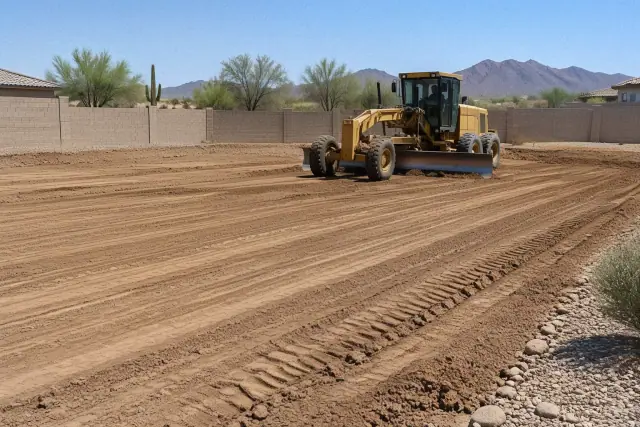
Motor grader smoothing a dirt surface for residential site grading in Gilbert, AZ.

We rough grade residential lots and commercial parcels to the pad and drainage elevations in the civil plans. Cut and fill work, compaction, and a final grade check prepare the site for the next construction phase.

Explore Service
Land Clearing

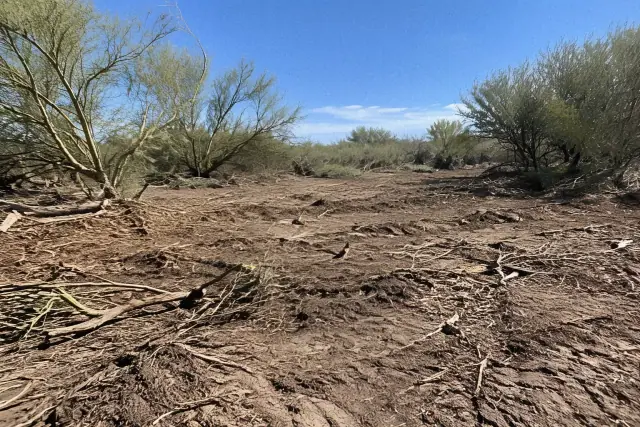
Cleared desert land with scattered woody debris and palo verde branches in Gilbert, AZ.

Brush, root mass, caliche outcroppings, and construction debris are removed within the clearing limits shown on your site plan. We clear palo verde, creosote, and mesquite growth where specified, then haul vegetative debris away before grading.

Explore Service

Utility Trenching

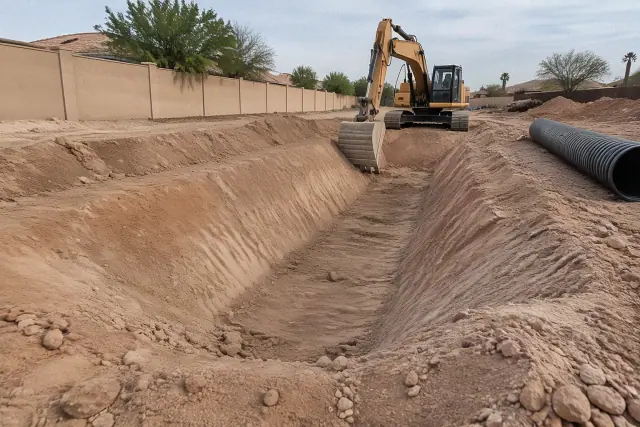
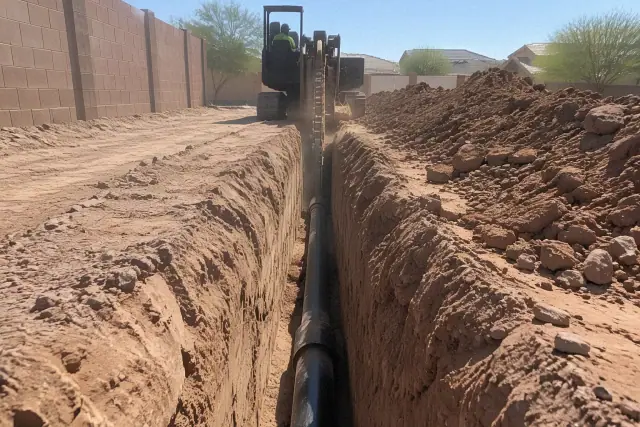
Open earthcut utility trench with exposed soil walls and pipe installation in Gilbert, AZ.

We trench for water, sewer, electrical, gas, and fiber lines to the specified depth and bedding requirements. Arizona 811 Blue Stake coordination comes before digging, and backfill is compacted in lifts to help limit later settlement.

Explore Service

Foundation Excavation & Building Pads

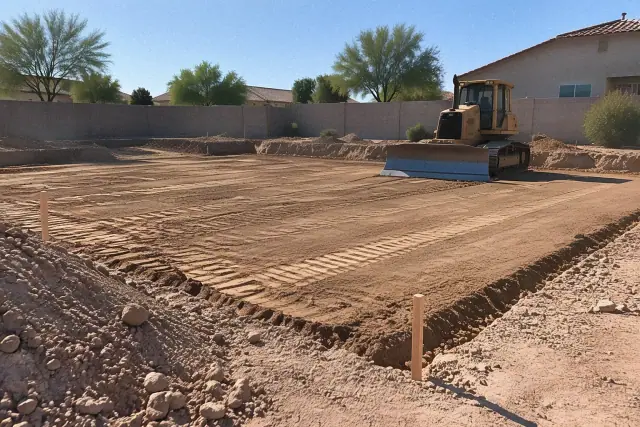
Bulldozer leveling an earthen pad for foundation excavation in Gilbert, AZ.

Footings for slab-on-grade and stem wall foundations follow stamped plans and the geotechnical report. We cut and fill building pads to design elevations, with over-excavation and structural fill where specified, and coordinate density testing before concrete work.

Pool Excavation

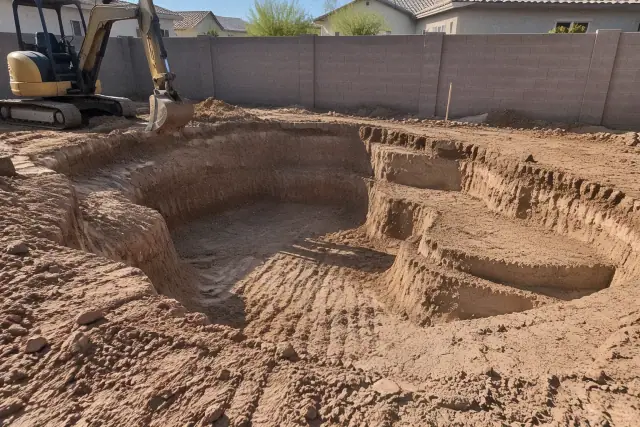
Compact excavator carving deep and shallow zones for a pool in Gilbert, AZ.

Pool cuts follow your builder's shape, depth, and bench details while accounting for block walls, irrigation, and existing landscaping. We coordinate spoil removal and excavation timing with the pool contractor so the next crew has room to work.

Pool Demolition & Removal

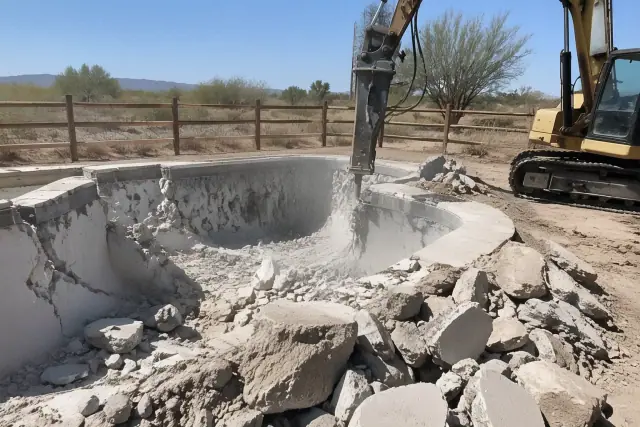
Excavator breaking concrete during a backyard pool demolition project in Gilbert, AZ.

Full shell removal and partial demolition with backfill require different work scopes. We coordinate the approved demolition approach, remove the specified shell and decking, and compact engineered fill in lifts for the planned yard use.

Concrete Demolition & Removal

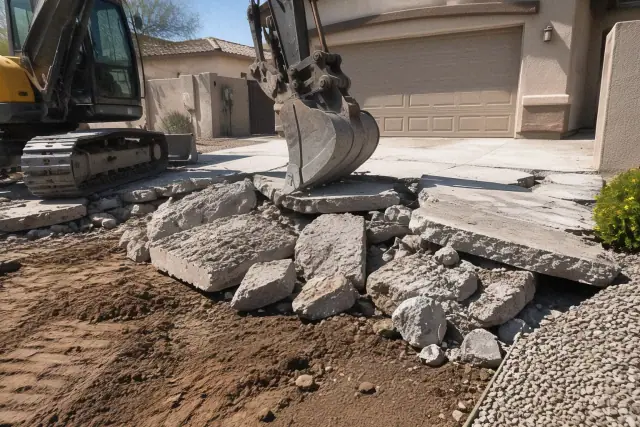
Heavy machinery breaking up driveway concrete for excavation in Gilbert, AZ.

We break out driveways, patios, slabs, and sidewalks with hydraulic hammers or excavator-mounted breakers. Rebar and wire mesh are removed along with the concrete, and debris goes to approved recycling or disposal facilities.

Drainage & Retention Excavation

Tracked excavator digging a trench for a stormwater retention system in Gilbert, AZ.

Swales, French drains, area drains, and retention basins are excavated to the approved drainage design. We establish flow paths, basin side slopes, and inlet and outlet grades so the work matches the site's stormwater plan.

Dirt & Rock Hauling

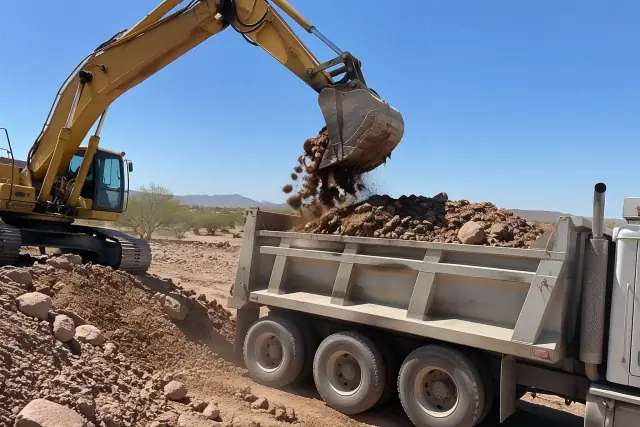
Excavator loading rock and earth into a haul truck at a job site in Gilbert, AZ.

We import structural fill selected for the plan's gradation and compaction requirements and export excess soil, caliche, and native rock. Load counts track material movement, while coordinated hauling keeps access available for following trades.

Hydro Excavation

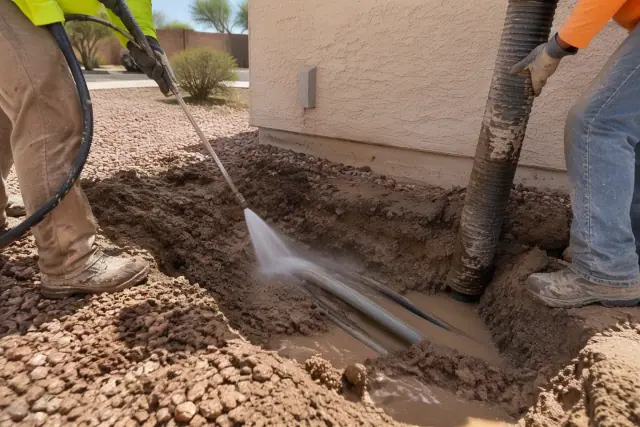
Hydro excavation in Gilbert, AZ showing a high-pressure water wand exposing underground utilities in wet soil.

Pressurized water and vacuum extraction expose utilities where mechanical digging calls for extra caution. We use hydro excavation for potholing and tight areas near known lines, with excavated spoils collected in a debris tank for removal.

Plan the Work

Choosing an Excavation Scope for Gilbert, AZ

A pool cut, a new home pad, and a drainage repair each need a different excavation plan. Start with the intended construction, then review soil, access, material handling, and testing so the estimate covers the work your site actually requires.

Start With the Civil and Soils Plans

Your civil plans establish pad elevations and drainage paths, while the geotechnical report sets excavation and fill requirements. We review both before defining the work so the scope follows the design instead of relying on lot size alone.

Account for Caliche Before Quoting

Caliche can occur two to four feet below natural grade, though its depth and thickness vary by parcel. We assess the hardpan and access before quoting the ripping or hoe-ram work the excavation may need.

Match Equipment to Site Access

Mini excavators can suit tight residential work, while larger pads may need full-size dozers and haul trucks. We review access around walls and landscaping before selecting equipment and planning material removal.

Include Drainage in the Grading Scope

Finished grade needs to connect the building pad, swales, and any retention area shown on the plans. Reviewing those elements together helps avoid a level-looking lot that still traps water beside a structure.

Define Fill and Compaction Requirements

Structural fill must match the soils report, including the required density and testing method. Structural pads typically call for 95 percent modified Proctor compaction; the project's geotechnical requirements control the actual work.

Coordinate the Following Trades

Footing pours, pool construction, and utility installation depend on the excavation sequence. We coordinate timing with your concrete, framing, or pool contractor and plan hauling so the next crew can reach its work area.

Gilbert Ground Conditions

Site Conditions That Complicate Excavation

Soil resistance, moisture changes, and limited drainage can affect both the digging and the finished site. A site walk helps identify these concerns while the scope and equipment plan can still be adjusted.

Request a Site Assessment

Hard Caliche Layers

Cemented calcium carbonate deposits can form hardpan several feet thick. Where a bucket cannot make steady progress, ripping or hoe-ramming may be needed before excavation can reach the specified depth.

Expansive Clay Below the Pad

Clay can shrink and swell as moisture changes around the foundation area. The soils report guides subgrade preparation, any required over-excavation, and compaction testing before a foundation is poured.

Ponding on Flat Lots

A flat lot may collect runoff instead of directing it along the intended drainage path. Monsoon rain, typically from mid-June through September, makes swale and retention grading especially relevant.

Utility Conflicts in Tight Spaces

Existing gas, electrical, water, and fiber lines can limit where equipment can dig. On infill sites, locate coordination and hydro excavation help expose utilities when the planned work is within a few feet of a known line.

Settling Trench or Pool Backfill

Loose backfill can settle beneath a restored yard or driveway. Material selection, placement in lifts, and the specified compaction checks address this risk before the surface is finished.

Pads That Miss Design Elevations

A pad off by a few tenths of a foot can affect door thresholds, drainage slopes, and retention volume. Grade checks before the concrete or paving phase help identify elevation discrepancies while earthwork adjustments are still practical.

Local Excavation Team

Why Work With Mesa Excavation Co. in Gilbert, AZ

We bring grading, trenching, demolition, and hauling into one coordinated scope for residential and commercial projects. The work begins with a written estimate and continues through the grade and compaction checks needed before the next trade starts.

Licensed, Bonded, and Insured

Mesa Excavation Co. operates as a licensed and bonded excavation contractor under the Arizona Registrar of Contractors and carries insurance for residential and commercial work. We coordinate permits and inspections through Town of Gilbert Development Services as part of the agreed scope.

Equipment for the Ground Conditions

Our crews use skid steers, excavators, compaction equipment, and attachments suited to the soil and available access. Laser and GPS grade control on larger commercial pads helps carry the design elevations across the footprint.

Written Estimates After a Site Walk

Clearing, grading, hauling, and compaction are scoped after we review the property. We explain how shallow caliche, utility conflicts, and access affect the work so you can understand the estimate before excavation starts.

From Plans to Final Grade

Our Site Preparation Process in Gilbert, AZ

We organize excavation around the approved plans, permit conditions, and your builder's schedule. These steps carry the job from the initial site walk through preparation for the next construction phase.

01.

Review the Site and Confirm the Scope

We walk the property and review civil plans, the geotechnical report, and permit conditions. The written scope identifies clearing, digging, drainage, material movement, and testing needs before equipment arrives.

02.

Clear the Work Area and Rough Grade

After required locate coordination and approvals, we remove specified vegetation, debris, and concrete. Rough grading establishes the pad and drainage elevations needed for the planned excavation.

03.

Excavate Utilities and Foundations

Utility trenches and footing cuts follow the plans, bedding details, and bearing requirements. We coordinate Arizona 811 Blue Stake requests ahead of digging and sequence utility exposure and foundation excavation around existing site conditions.

04.

Place Fill and Coordinate Testing

Required structural fill and trench backfill are placed and compacted in lifts. Density testing is coordinated with the geotechnical engineer so the results can be checked before foundation or paving work proceeds.

05.

Haul Dirt, Rock, and Debris

Import and export hauling keeps the specified fill available and removes excess spoil from the property. We track loads and coordinate truck access to keep work areas open for following trades.

06.

Check Final Grades and Drainage

We verify pad elevations, drainage paths, and retention grades against the plans. Required inspections and remaining grade adjustments are coordinated before handing the site over for the next phase.

Project Applications

Excavation Priorities for Homes and Businesses

Case Study 1: Custom home lots: Foundation depth, bearing conditions, and pad compaction need to agree with the soils report. For a Circle G Ranches building site, the excavation scope can bring footing cuts, structural fill, and hauling into the same construction sequence.

Case Study 2: Backyard projects: Pool excavation, pool removal, and drainage work require attention to access around existing walls, irrigation, and landscaping. On properties in Agritopia, Val Vista Lakes, or Seville, the site walk helps define the equipment route and material removal plan.

Case Study 3: Commercial and border-area projects: Retail and light industrial pads near the Loop 202 corridor need coordinated grading, utilities, and retention work. For projects spanning Gilbert and Chandler, AZ , we review the plans and jurisdiction for each site before setting the excavation scope.

Plan Your Site Work

Request a Gilbert Excavation Estimate

Tell us what you plan to build, remove, or regrade and share the civil or pool plans you have available. We will walk the site, review access and soil conditions, and prepare a written excavation scope and estimate.

Excavation Questions

Site Preparation and Grading FAQs in Gilbert, AZ

These answers cover excavation scope, pricing factors, site conditions, and preparation for construction. Your plans, soils report, and the applicable permit review determine the requirements for the property.

Discuss Your Project

Confirm the proposed structure with Town of Gilbert Development Services before starting. Do not assume a one-story pergola under 200 square feet is exempt: the structure type, attachment to the house, and electrical work matter to the review. Once the permit requirements are clear, we can scope the grading, footing holes, or utility trenching the project needs.

The approved grading and drainage plans establish pad elevations, flow paths, and retention details for the site. Gilbert's Public Works and Engineering Standards and Development Services review also address utility and other site improvements. We work from the approved plans and coordinate the applicable inspections with the project team.

Cost depends on lot size, existing vegetation, caliche, access, and the amount of cutting, filling, and hauling required. Commercial pad work can also involve a different equipment and testing scope than residential grading. We prepare a written estimate after a site walk, with clearing, grading, hauling, and compaction identified so you can understand the price.

A typical single residential lot may move through grading and foundation excavation within a matter of days once permits are in hand. Larger pads, extensive retention work, hard caliche, testing, and inspections can extend the schedule. Rain can also pause exposed-soil work, so we discuss the sequence with your builder during estimating.

Plan for permit review through the Town of Gilbert Building Division before pool demolition. The approved scope needs to address full removal or partial demolition, drainage, and the backfill and compaction plan. We coordinate the application and required inspections as part of our pool demolition work, with the specific requirements confirmed for your property.

Hard caliche may require a ripper attachment or hoe-ram before excavation can continue to the design depth. The geotechnical report determines bearing conditions and whether over-excavation and recompaction are needed. We discuss the effect on equipment time and material handling when defining the scope.

Hydro excavation is useful for utility potholing and exposure near existing lines, especially where access is tight or utility records need confirmation. Pressurized water loosens the soil and a vacuum collects the spoils in a debris tank. The method helps reduce reliance on mechanical digging immediately around buried infrastructure.

We coordinate Arizona 811 Blue Stake locates before digging and plan the trench around the utility depth, bedding, and site conditions. OSHA generally requires a protective system for trenches 5 feet deep or greater unless the excavation is entirely in stable rock; a competent person must also assess shallower cuts for cave-in hazards. Trench protection and access are addressed before crew members enter the excavation.

We coordinate density testing with your geotechnical engineer as fill is placed and compacted. The soils report supplies the required density and test criteria for the pad. Testing and final grade checks are coordinated before the next foundation phase proceeds.

Yes, we handle both import and export hauling. Structural fill is selected to match the engineering plans, while excess soil, broken caliche, and grading spoils are hauled to approved destinations. Load counts track how much material moves on and off the property.

We review block walls, irrigation lines, mature landscaping, and equipment access during the site walk. The excavation follows the shape, depth, and bench details in your pool builder's plans. We coordinate spoil removal and timing with the pool contractor so the following crew has access.

Our clearing scope includes specified brush, vegetation, root mass, caliche outcroppings, and construction debris within the planned work area. Vegetative debris is hauled away so grading can proceed on a cleared building envelope. The site walk and plan review establish what is to be removed.

We work throughout Gilbert, including the Heritage District and development areas near Germann Road and Higley Road. Our coverage also includes Mesa, Queen Creek, Tempe, and the San Tan Valley area. Share the property location and project plans so we can review access and the excavation scope for that site.

Yes, concrete demolition covers driveways, patios, slabs, and sidewalks, including removal of rebar and wire mesh. Equipment selection depends on slab thickness and reinforcement. We haul the broken material to approved recycling or disposal facilities as part of the removal scope.

Maricopa County requires a dust control permit for dust-generating operations that disturb 0.10 acre or more, including applicable access, staging, and storage areas. Review the total disturbed area before clearing or grading begins. We include permit conditions in the site assessment and work sequence.