Proudly serving Mesa, Gilbert, Chandler, Tempe, Scottsdale, Queen Creek & surrounding areasCall or Text 24/7: 480-210-6373
Stucco homes and saguaro cacti in a suburban Mesa, AZ neighborhood under bright daylight.

Pool Excavation Services in Mesa, AZ for Inground Pool Digging & Site Prep

Mesa Excavation Co. provides pool excavation for homeowners, pool builders, and contractors in Mesa, Arizona. We cut new inground pool basins to the builder's plans and handle the site preparation and grading that make the dig possible. Our services also include pool demolition and removal, concrete removal, utility trenching, and dirt and rock hauling. From clearing the equipment route to shaping the deep end, we coordinate the dirt work around your project.

Caliche beneath a Mesa backyard can stop a standard digging bucket and turn a simple pool layout into a more demanding excavation. We assess the soil, equipment access, and haul distance before quoting the work. Tracked excavators, hydraulic hammers, and laser grade control help us match the approach to the ground and the approved pool design. Contact us for a property walkthrough and a written plan before equipment arrives.

Our licensed and bonded excavation team works with your pool builder on layout, utility locates, and the handoff to the next trade. We explain changes in soil conditions or buried debris before continuing with work that changes the scope.

Mesa Excavation Co. provides pool excavation throughout Mesa and the East Valley, including Tempe, Chandler, Gilbert, Queen Creek, and Apache Junction.

★ ★ ★ ★ ★4.9/5 Customer Rating · 28 Years of Excavation Experience · 1,000+ Projects Completed · Licensed, Bonded & Fully Insured · Residential & Commercial Site Work

Pool Excavation Options & Benefits

What Does Pool Excavation Include?

Pool excavation turns a builder's plan into the basin that will receive the structural steel, plumbing, and gunite. It includes staking the shape, stripping topsoil, removing bulk soil, and shaping the benches, steps, deep end, and bond beam shelf.

The excavation must match the specified depths and elevations, not just the outline visible from the yard. Laser and rotary-level checks help hold benchmark elevations within fractions of an inch, protecting the dimensions needed by the trades that follow.

Spoil removal is part of the work from the start. We load and haul excavated dirt and rock as the dig progresses, keeping the equipment route usable and preventing piles from taking over the yard.

Benefits of a Carefully Planned Pool Dig

A coordinated excavation gives the pool builder a usable basin and keeps the surrounding property workable. These details help prevent avoidable corrections between the dirt work and the next construction stage.

  • Pool dimensions cut to the builder's plan set
  • Bench and step shaping for the planned pool layout
  • Laser checks for basin and shelf elevations
  • Equipment selected for sandy soil or caliche hardpan
  • Utility locate coordination before digging
  • Continuous loading and haul-off during excavation
  • Access planning around block walls and property lines
  • Clear updates when unexpected ground conditions change the scope
From Site Preparation to Haul-Off

Pool Project Excavation Services

A new pool can involve more than cutting the basin. We coordinate the clearing, grading, demolition, utility work, and hauling described below so the excavation fits the rest of your property project.

New Inground Pool Excavation

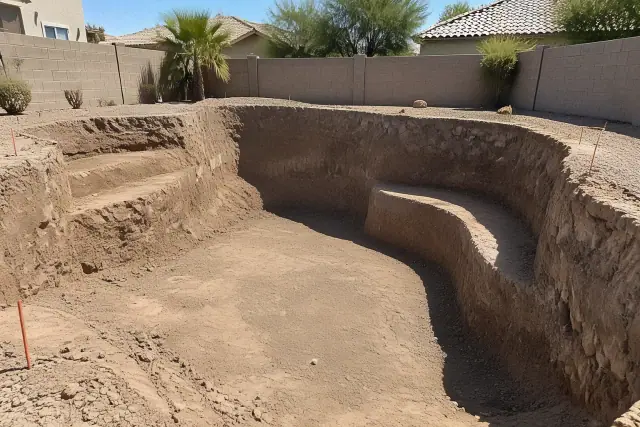
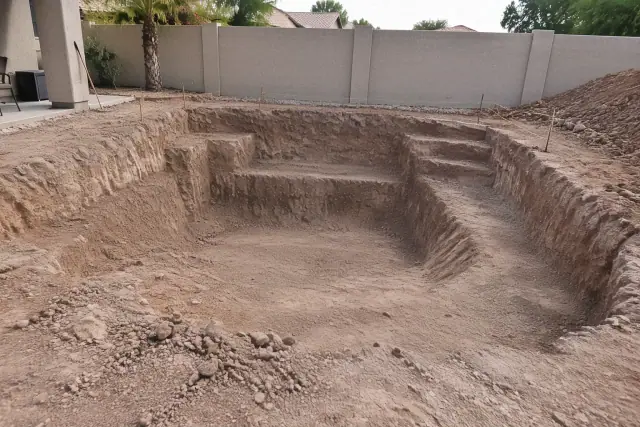
New inground pool excavation in a Mesa, AZ backyard with caliche clay soil and tiered depths.

We stake the builder's pool layout and excavate in stages, moving from the main basin to the precise shaping of shelves, benches, and steps. Depth and grade checks keep the cut aligned with the plan before structural steel and gunite work begin.

Request Estimate

Site Preparation, Grading & Land Clearing

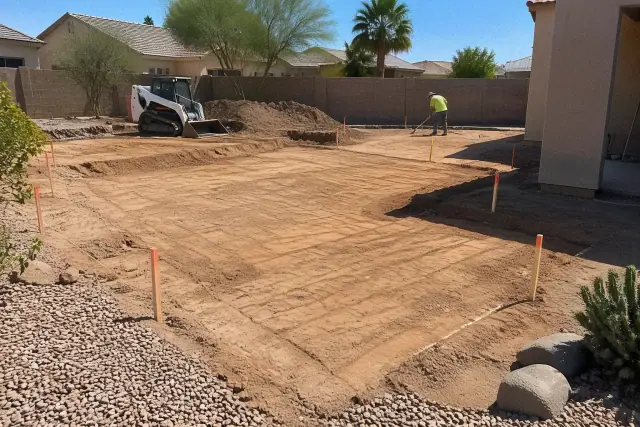
Site preparation and grading for a pool excavation at a residential property in Mesa, AZ.

Mesquite, palo verde, creosote, and their root systems can obstruct a desert lot before digging starts. We clear vegetation, grub roots, and prepare workable ground, then grade the site with equipment access and runoff paths in mind.

Request Estimate

Pool Demolition & Removal

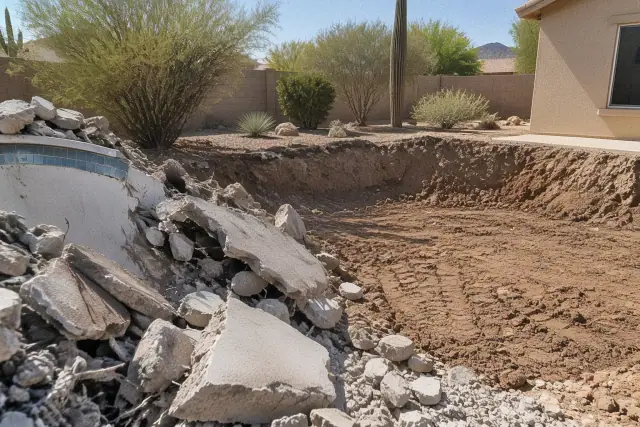
Fractured concrete pool fragments and backfilled earth pit during a residential pool demolition in Mesa, AZ.

Replacing an old pool or reclaiming the yard starts with a defined removal scope. Full removal takes out the shell material for haul-off, while a partial fill breaks the bottom for drainage and leaves shell material on site. Pool size, gunite, vinyl or fiberglass construction, and access affect the demolition and hauling involved.

Request Estimate

Concrete Demolition & Debris Removal

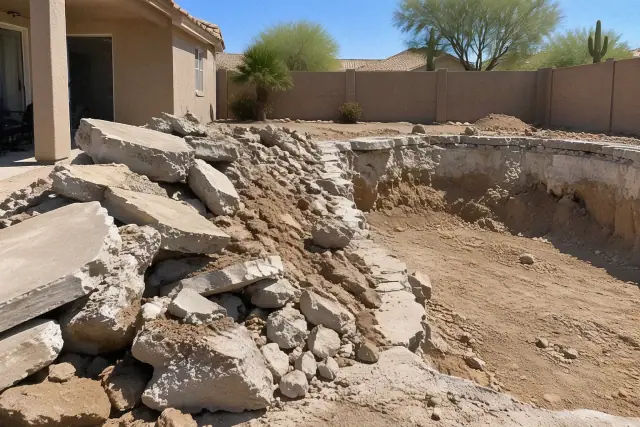
Concrete demolition and debris removal for a pool excavation in Mesa, AZ.

Hydraulic hammers break out pool decking, coping, and concrete shells so the debris can be loaded for removal. We separate rebar and mesh for recycling where possible and take concrete to a licensed recycling or disposal facility.

Request Estimate

Utility Trenching & Line Exposure

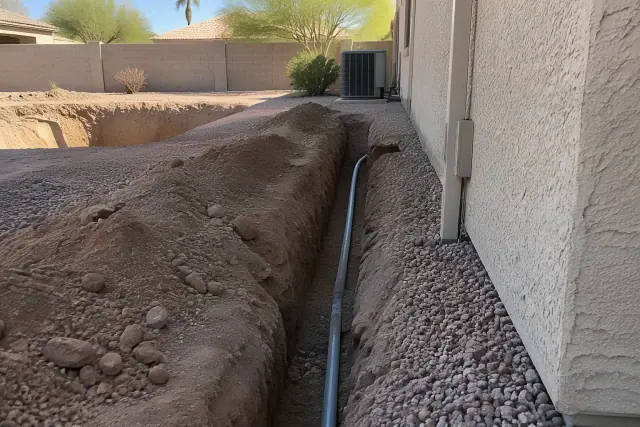
Utility trenching and exposed conduit for pool excavation at a residential home in Mesa, AZ.

Water, sewer, and electrical runs need a planned trench route and attention to existing utilities. We coordinate Arizona 811 locates and expose lines within the tolerance zone before machine digging resumes. Hydro excavation is available for careful exposure around gas, fiber, electrical conduit, and irrigation infrastructure.

Request Estimate

Dirt & Rock Hauling

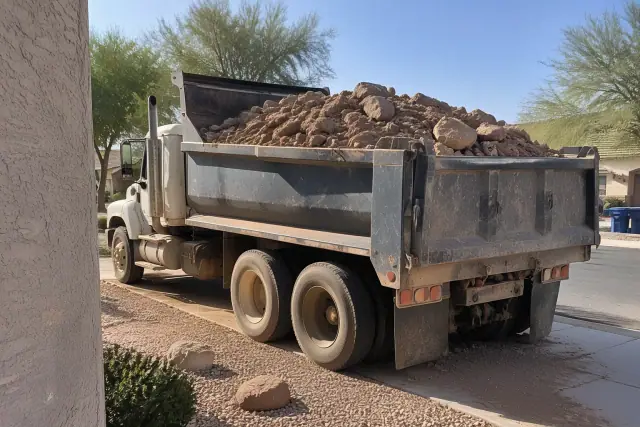
Industrial haul truck loaded with stone and earth for a pool excavation project in Mesa, AZ.

Dump trucks and trailers move excavated dirt, caliche, broken concrete, and demolition debris off site while digging continues. Oversized hardpan chunks are broken down for loading, and clean fill may be reused or diverted to approved fill sites. Larger projects can use additional trucking to keep pace with excavation.

Request Estimate
Match the Method to the Ground

Excavation Methods & Related Site Work

The right approach depends on the ground, the pool design, and the work planned around it. We match digging methods to soil and utility conditions and coordinate building pads or drainage excavation when those services are part of the scope.

Contractor photo of pool basin shaping and excavation in a Mesa, AZ backyard.

Standard & Custom Pool Basin Shaping

A 14x28 pool basin and a custom pool with an attached spa need different layouts, even when both fit in a backyard. We use the builder's dimensions to shape the main basin and each detailed feature.

  • Pool outline staked from the plot plan
  • Deep-end contours matched to specified elevations
  • Benches and steps shaped in the cut
  • Bond beam shelves checked against the design
  • Tanning ledges and attached spas included when planned
Request Estimate
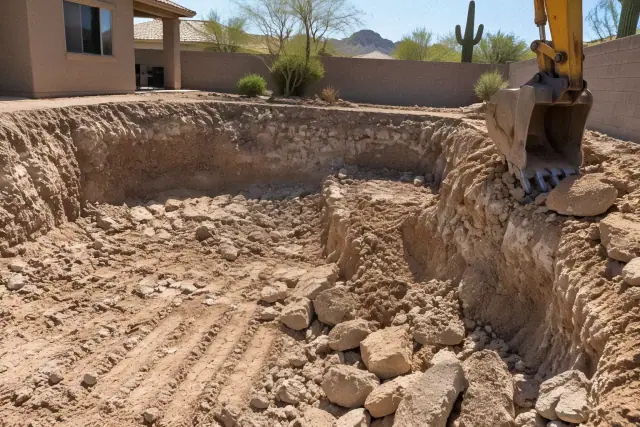
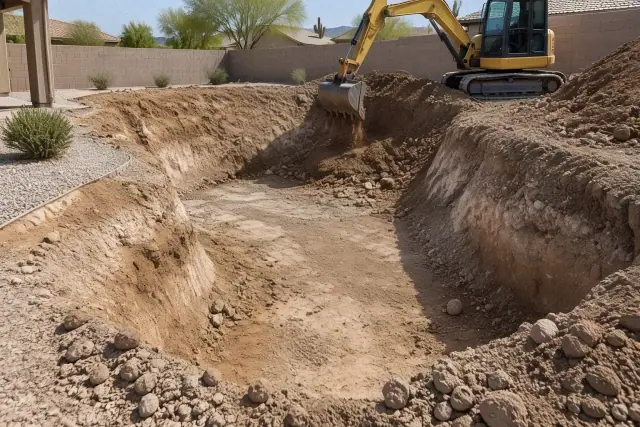
Backyard pool excavation showing fractured caliche soil and heavy bucket marks in Mesa, AZ.

Caliche Breaking & Soil-Matched Digging

Mesa soil can range from sandy loam near the Salt River corridor to decomposed granite and dense caliche near Red Mountain and the US-60 corridor. Caliche is cemented calcium carbonate hardpan that may run from a few inches to several feet thick and can reach 300 psi or harder.

  • Standard buckets for workable sandy loam
  • Hydraulic hammer attachments for resistant hardpan
  • Ripper teeth or hoe ram passes where needed
  • Soil samples used to anticipate caliche depth
  • Machine selection based on the actual ground
Request Estimate
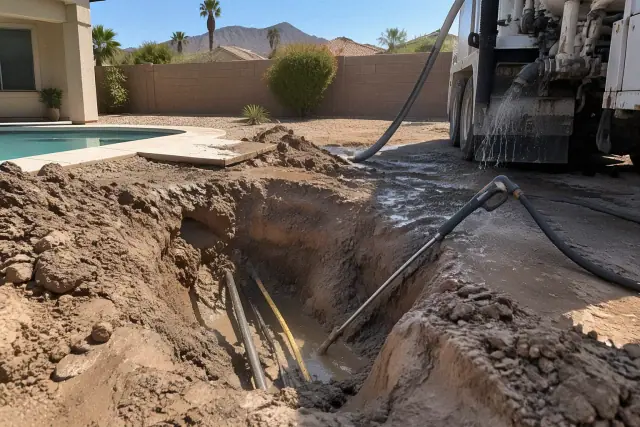
Hydro excavation for a pool project exposing buried utilities in Mesa, AZ.

Hydro Excavation Near Buried Utilities

Pressurized water loosens soil while a vacuum system lifts the slurry into a debris tank. This method exposes utilities without a digging bucket contacting the line and can limit the excavation width and restoration work in tight corridors.

  • Daylighting of gas, fiber, and electrical lines
  • Controlled exposure around irrigation infrastructure
  • Vacuum collection of loosened soil and water
  • Narrower excavations where access is constrained
  • Utility location coordinated before exposure work
Request Estimate
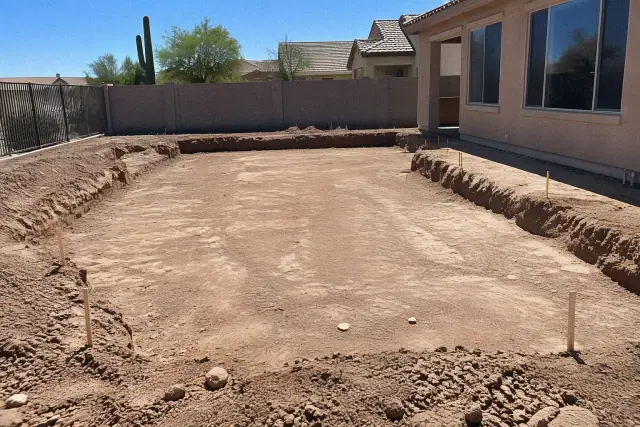
Foundation excavation and building pad with wooden stakes at a residential property in Mesa, AZ.

Foundation Excavation & Building Pads

For a garage, ADU, workshop, or commercial pad, we strip organics and place engineered fill in controlled lifts. Compaction targets are often 90-95 percent of maximum dry density under a standard or modified Proctor test, with verification coordinated through a geotechnical engineer and the project requirements.

  • Excavation to the civil plan elevations
  • Controlled fill lifts and compaction passes
  • Soil testing coordinated with the project team
  • Drainage typically graded at a minimum 2 percent slope for the first several feet away from the structure
  • Pad inspection coordinated before foundation forms
Request Estimate
Tracked excavator digging a drainage trench in a residential yard in Mesa, AZ.

Drainage & Retention Excavation

Swales, area drains, and discharge lines help manage intense monsoon runoff. For commercial sites and subdivisions, retention plans may specify capacity for a 100-year, 2-hour storm event; we excavate to the approved volume and side slopes, typically 4:1 or flatter for maintenance access.

  • Swales and runoff routes cut to the drainage plan
  • Retention basin floors finished to design grade
  • Outlet structures or weirs installed where specified
  • Floor compaction where a liner or clay cap is required
  • Sediment removal to restore reduced basin capacity
Request Estimate
Plan Around Your Property

Choosing the Right Excavation Approach

Start with the pool builder's plan, then evaluate soil resistance, block wall clearances, utility routes, and truck access. Those conditions determine whether the work needs a standard bucket, a hydraulic hammer, careful utility exposure, or a combination. A site walkthrough lets us explain the equipment and hauling plan before you commit to the scope.

Local Soil Experience

Our crews have worked across Mesa's soil conditions, from sandy lots near the Salt River to caliche shelves near Usery Mountain and Signal Butte. That experience helps us plan the equipment around the site instead of assuming every backyard will dig the same way.

Equipment for Precise Pool Cuts

Tracked excavators, skid steers, hoe rams, vacuum trucks, and haul trucks serve different parts of the job. Laser grade control helps us check the pool cut against the builder's required elevations and keep the detailed shaping consistent with the plans.

Written Scope & Clear Updates

We walk the property before quoting and explain how soil conditions, access, and disposal affect the job. If unexpected caliche or buried debris changes the work, we discuss the scope with you before continuing.

Preparation That Matters

A Pool Dig Planned Around Your Property

Mesa Excavation Co. operates as a licensed and bonded excavation contractor under Arizona Registrar of Contractors requirements and maintains general liability coverage. Our planning connects the pool layout, utility exposure, equipment route, and hauling schedule. Addressing the problems below before mobilization helps keep the excavation ready for the next trade.

Request a Site Assessment

Caliche That Stalls the Dig

Hardpan can resist a rented mini-excavator and leave a pool project stalled after the topsoil comes off. Soil assessment helps identify where ripping teeth or a hydraulic hammer may be needed before standard digging can continue.

Off-Grade Basins & Shelves

A cut that misses the plan by even two inches can require added fill or a shelf to be cut again. Checking elevations during excavation helps protect the bond beam, steel placement, and gunite work from avoidable corrections.

Unmarked or Exposed Utility Lines

A buried gas, water, fiber, or irrigation line can be close to the pool layout or access route. Locate coordination and careful exposure help establish where machine digging must give way to hand work or hydro excavation.

Tight Backyard Equipment Access

Narrow access and block walls can limit the equipment that reaches the pool site and complicate loading. We check clearances and the route to the yard during the assessment so access work is included in the plan.

Spoil Piles Blocking the Yard

Excavated dirt piled against block walls or across a drainage route creates problems beyond the pool hole. Scheduling haul trucks alongside the dig keeps material moving and helps preserve access for the next construction stage.

Monsoon Runoff Around the Site

Short, intense storms can overwhelm a poorly graded lot and send water toward a foundation or excavation. We consider existing runoff paths and coordinate grading, swales, or drainage excavation where they are included in the project.

From Walkthrough to Handoff

Our Pool Excavation Process

The work moves from a property assessment and plan review to utility coordination, staged digging, and a grade check before handoff. Each step addresses a condition that can otherwise interrupt the pool builder's schedule.

01.

Assess Soil, Access & Hauling

We walk the yard, review block wall and property line clearances, and check for irrigation and septic lines. Soil samples help anticipate hardpan, while the access route and haul distance shape the equipment plan and written estimate.

02.

Review Plans, Permits & Setbacks

We coordinate with your pool builder to confirm that permits are in place before mobilization. The plot plan guides the pool shape, and setback review checks how the layout fits the property lines and City of Mesa requirements.

03.

Coordinate Utility Locates

Our planning includes an Arizona 811 Blue Stake locate request at least two full working days before digging. Required utility responses must be complete before excavation starts, and lines are carefully exposed where the work approaches marked utilities.

04.

Strip Topsoil & Excavate the Basin

After layout, the crew strips topsoil and removes the bulk of the basin soil. Hammer or ripper work addresses resistant caliche, while trucks load and haul spoil continuously to keep the working area accessible.

05.

Shape Features & Check Grades

We finish the benches, steps, deep end, and bond beam shelf to the pool design. Laser and rotary-level checks compare the cut with benchmark elevations so discrepancies can be addressed before the next trade begins.

06.

Finish Haul-Off & Coordinate Handoff

We coordinate same-day spoil hauling as the dig progresses, sending material to appropriate reuse, recycling, or disposal destinations. The final layout and grade review supports the handoff to the pool builder, and the excavation remains secured while work continues.

Plan Your Backyard Project

Request a Pool Excavation Estimate

Bring your pool plans and discuss the site conditions with Mesa Excavation Co. We will walk the property, assess soil and access, and provide a written excavation scope. Homeowners in Dobson Ranch, Red Mountain Ranch, Las Sendas, and across Mesa can contact us to plan the dig and hauling schedule.

Planning Your Pool Dig

Pool Excavation FAQs

These answers cover excavation cost, scheduling, permits, soil conditions, and the work around a new or existing pool. For details about your property, contact us with the pool layout and any known access concerns.

Discuss Your Pool Project

Pool excavation in the Phoenix metro area generally ranges from roughly $2,500 to $10,000 or more, depending on size, soil conditions, and haul-off distance. Caliche, tight backyard access, and block wall removal for equipment entry can increase the cost. A full custom inground pool build, including excavation, typically runs from around $55,000 up to $150,000 or more depending on size and features, so the dig is only one part of the total. We provide a written estimate after assessing the property.

New inground pool construction requires a City of Mesa building permit and review of the pool plans. The review covers structural, electrical, and barrier requirements under the adopted pool code, including the International Swimming Pool and Spa Code with local amendments. We coordinate with your pool builder to confirm permits and utility locates before mobilizing equipment.

Most standard residential pool digs in workable soil take one to two working days. Heavy caliche or difficult access can extend excavation to three or four days, and custom shapes, tanning ledges, or attached spas can add time. We schedule haul trucks alongside the digging so spoil removal does not hold up the next trade.

Common problems include cuts that miss the planned grade, incorrect bench or bond beam shelf dimensions, and digging before utilities are located. Underestimating caliche hardness can also leave rented equipment unable to continue. Poor spoil placement can block equipment access or divert runoff toward the house.

Yes, we handle backyard pool excavation as well as commercial building pads, retention basins, and utility trenching. Equipment and trucking are planned around the project, from a single backyard dig to multi-acre site preparation. The assessment establishes how the pool or other excavation fits the overall site work.

Rental equipment alone does not address the utility risks, soil conditions, and precise elevations a pool structure needs. Caliche can stop a standard bucket, while an incorrect cut may require engineered fill or reshaping before the builder can proceed. Have the excavation scope and safety requirements assessed before committing to a DIY dig.

Mesa pools generally need an approved barrier, commonly at least five feet tall, with self-closing and self-latching pedestrian gates. The accepted enclosure depends on the pool design and how the yard and dwelling connect to it. Confirm the barrier details with the City of Mesa and your pool builder during plan review so they are addressed before final inspection.

An above-ground pool can still require a permit and an approved barrier; being portable does not automatically exempt it. Mesa applies location and fencing requirements to contained water at least 18 inches deep, and other dimensions and installation conditions also matter. Confirm the specific pool and site requirements with the City of Mesa Building Safety Division before installation.

We assess the soil before mobilizing and select digging equipment for the expected resistance. Hard caliche can call for a hydraulic hammer, hoe ram, or ripper tooth pass before bulk excavation continues. If unexpected material changes the scope, we explain the effect on the work before proceeding.

Clean fill may go to approved fill sites or be reused on other jobs where suitable. Concrete can go to recycling facilities that crush it into base material, while mixed demolition debris goes to a licensed Maricopa County transfer station. Continuous haul-off keeps those materials from accumulating across the yard.

Full removal takes out all shell material and involves more demolition and hauling than a partial fill, which breaks the bottom for drainage and leaves shell material on site. Phoenix-metro excavation and removal work has typically ranged from roughly $2,500 into five figures depending on scope, so the existing pool and access need assessment. Before demolition, we coordinate draining to the sanitary sewer or another permitted method instead of discharging chlorinated water into a street or wash.

The protective approach depends on the soil, excavation depth, and site conditions under OSHA 29 CFR 1926 Subpart P. Excavations five feet deep or more generally require cave-in protection unless entirely in stable rock; shallower cuts can also require protection based on a competent person's assessment. We plan sloping or shoring for the conditions and keep the work area secured to limit access by children and pets.

We review the builder's layout, the expected soil, access past walls and property boundaries, and the distance involved in hauling spoil. Existing irrigation, septic lines, utility routes, and any demolition are also part of the assessment. Those details let us provide a written scope and explain which conditions could change the work.