Proudly serving Mesa, Gilbert, Chandler, Tempe, Scottsdale, Queen Creek & surrounding areasCall or Text 24/7: 480-210-6373
Stucco homes and saguaro cacti in a suburban Mesa, AZ neighborhood under bright daylight.

Hydro Excavation Services in Mesa, AZ for Utility Potholing & Soft-Dig Trenching

Mesa Excavation Co. provides hydro excavation in Mesa, AZ, using pressurized water and vacuum equipment to expose underground utilities. Our crews handle utility potholing, soft-dig trenching, and precise excavation around foundations. We also provide site preparation and grading, land clearing, pool excavation and removal, and dirt and rock hauling for residential, commercial, and industrial projects.

Caliche, rocky hardpan, and crowded utility routes make digging in Maricopa County demanding. Our crews adjust water pressure to the soil and remove loosened material as they work, helping expose buried lines with controlled excavation. Every job begins with an Arizona 811 locate request and a site-specific safety plan. Contact our bonded and insured team for a free excavation estimate before your next dig.

Our hydrovac operators hold commercial driver's licenses and train in non-destructive digging and OSHA excavation standards. Cable location services and gas line detection help guide work near existing infrastructure.

Mesa Excavation Co. provides hydro excavation in Mesa and nearby Tempe, Chandler, Gilbert, Queen Creek, and Apache Junction.

★ ★ ★ ★ ★4.9/5 Customer Rating · 28 Years of Excavation Experience · 1,000+ Projects Completed · Licensed, Bonded & Fully Insured · Residential & Commercial Site Work

Hydro Excavation Methods & Benefits

How Water and Vacuum Excavation Work

Hydro excavation combines a handheld high-pressure water wand with a vacuum system. Water breaks up the soil, and the vacuum moves the resulting slurry into a debris tank on the truck. This controlled method exposes utilities and creates focused excavation zones.

As Mesa grew past 504,258 residents to become Arizona's third-most populous city, its underground network expanded with water mains, gas lines, fiber optic cable, and electrical conduit. Exposing those lines before mechanical excavation helps crews understand the actual conditions below the surface.

Water-based digging can work through caliche-heavy soil without the vibration of mechanical excavation. It suits potholes, precise trench profiles, and work beside existing infrastructure; large-volume earthwork calls for a different balance of equipment and production needs.

What Controlled Utility Exposure Helps Protect

The value of hydrovac work is in exposing what a bucket cannot see. Matching the excavation to the utility route helps limit unnecessary digging and prepares the area for the next crew.

  • Confirm buried utility depth and alignment
  • Reduce the risk of striking gas lines and fiber optic cable
  • Create focused potholes and trench profiles
  • Limit over-digging and extra backfill
  • Remove slurry directly into the truck tank
  • Work around foundation stub-outs and existing conduit
  • Break up hardpan without mechanical digging vibration
  • Support excavation on tight urban lots
Hydrovac Applications

Precision Digging Services

Our hydro excavation services focus on utility exposure and carefully defined dig areas. We combine soft digging, location work, and vacuum removal to support construction where existing lines and structures need attention.

Hydro Excavation

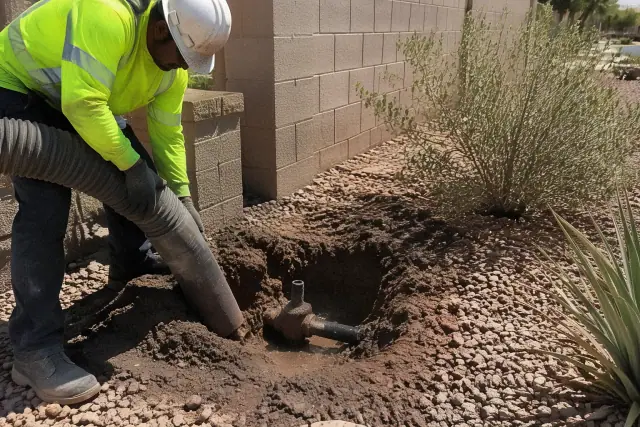
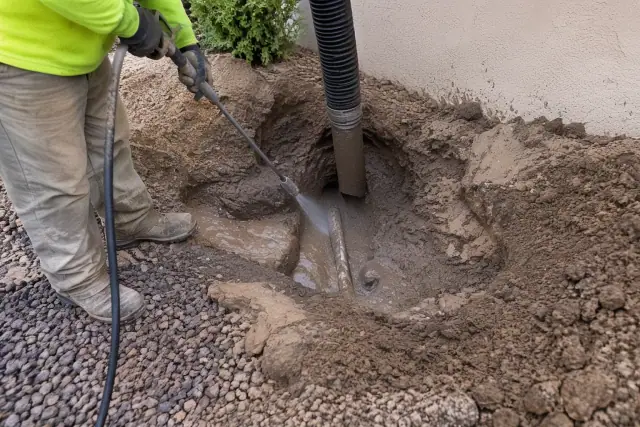
Muddy soil slurry pooled around an uncovered utility line in a yard in Mesa, AZ.

Pressurized water loosens soil while an industrial vacuum draws the material into the truck. Our operators adjust the water system to local soil conditions, including the caliche and rocky hardpan found across Mesa.

Request Estimate

Utility Potholing and Detection

Hydro excavation utility potholing in a residential yard in Mesa, AZ.

Small test holes reveal the position and depth of buried utilities before heavy equipment moves in. Cable location services and gas line detection support targeted exposure of water mains, sewer routes, and electrical conduit.

Request Estimate

Soft-Dig Utility Trenching

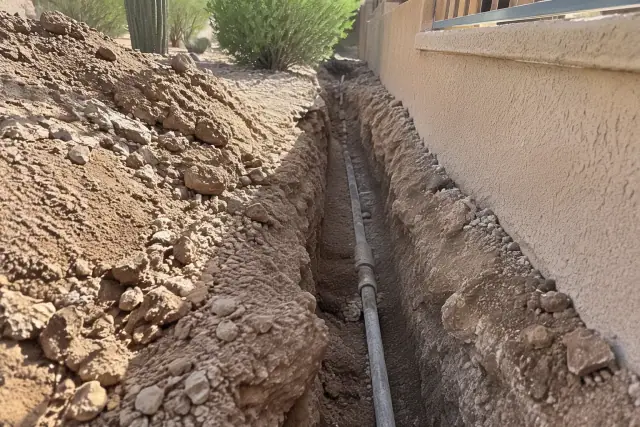
Soft-dig utility trenching for hydro excavation in Mesa, AZ, showing an exposed utility line in desert soil.

We soft-dig test holes at intervals along a planned utility route to check depth and alignment before the trencher engages. The exposed conditions help crews plan the trench around existing lines.

Request Estimate

Foundation Utility Exposure

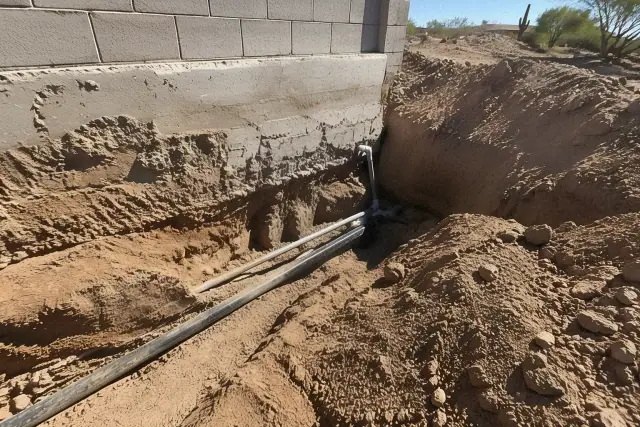
Foundation utility exposure and hydro excavation work in Mesa, AZ, showing exposed soil and utility lines in arid desert

Hydrovac excavation helps reveal utility stub-outs and conduit around footings. Controlled soil removal supports foundation work where nearby rebar cages and installed services leave little room for careless digging.

Request Estimate

Vacuum Debris Removal

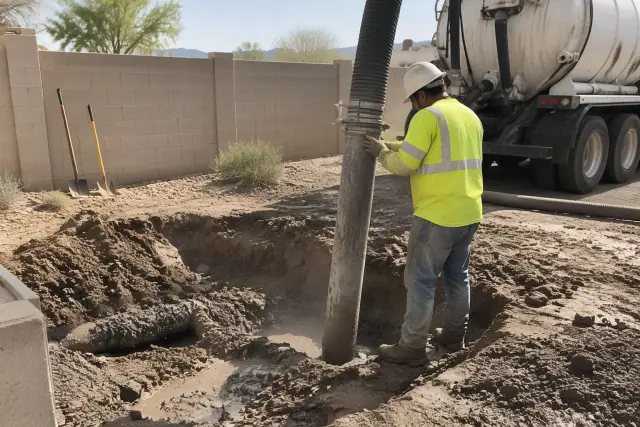
Vacuum debris removal and suction hoses for hydro excavation on a jobsite in Mesa, AZ.

The vacuum boom collects loosened soil and water as excavation progresses, keeping spoils in the debris tank instead of a loose pile beside the hole. Our truck fleet supports work on tight urban parcels and open commercial sites.

Request Estimate

Accurate Site Preparation

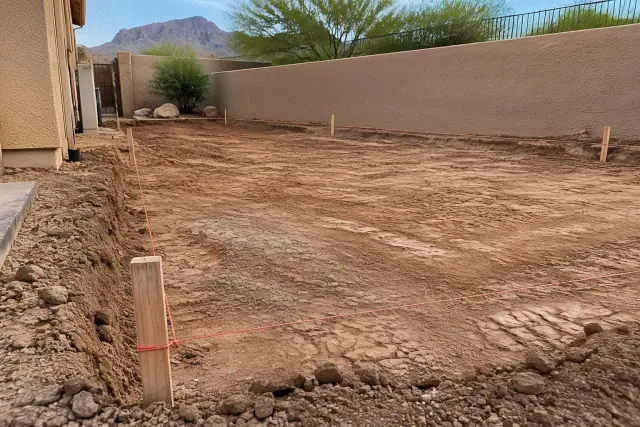
Caliche clay soil and staked string lines at a residential hydro excavation site preparation in Mesa, AZ.

High-pressure water excavation creates defined utility exposure zones and trench profiles. Limiting over-digging helps control the amount of backfill and compaction needed when that phase of work is complete.

Request Estimate
Residential and Commercial Work

Excavation Options for Your Project

Hydrovac work can be one part of a larger excavation scope. We pair precise utility exposure with the site, foundation, pool, and drainage services required for the project, coordinating the work around its plans and existing conditions.

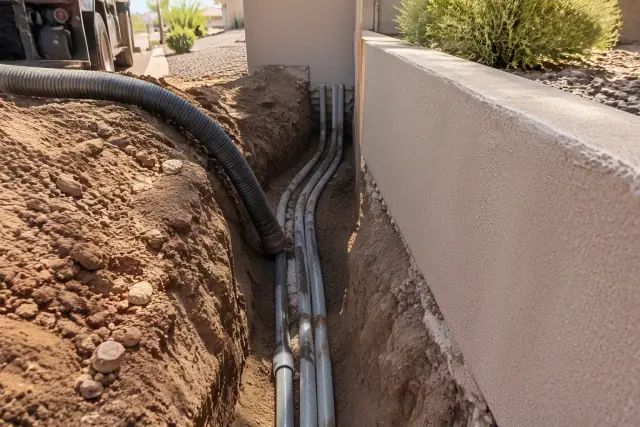
Utility trenches and exposed conduits during hydro excavation at a residential property in Mesa, AZ.

Residential Utility Excavation

Residential digs need attention to buried services, limited backyard space, and existing landscaping. We help expose utility routes before the next phase of a home project, including work in Dobson Ranch and Las Sendas.

  • Water main exposure zones
  • Sewer line excavation paths
  • Electrical conduit identification
  • Utility checks for home additions
  • Careful digging near existing landscaping
Request Estimate
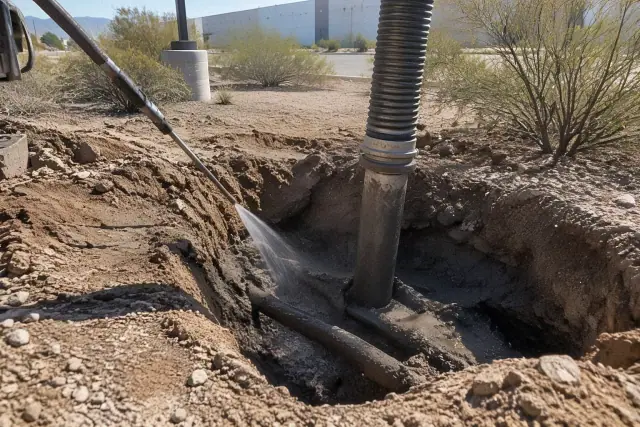
Hydro excavation at a commercial site in Mesa, AZ, using a water wand and vacuum hose in desert soil.

Commercial and Industrial Excavation

Commercial and industrial sites often combine dense utility networks with active operations. Our crews use controlled excavation to support work where damage to a buried line could disrupt a facility or construction schedule.

  • Warehouse projects near Phoenix-Mesa Gateway Airport
  • Retail pads along the Loop 202 corridor
  • Manufacturing facilities and data center builds
  • Utility corridors with closely spaced lines
  • Excavation planned around existing operations
Request Estimate
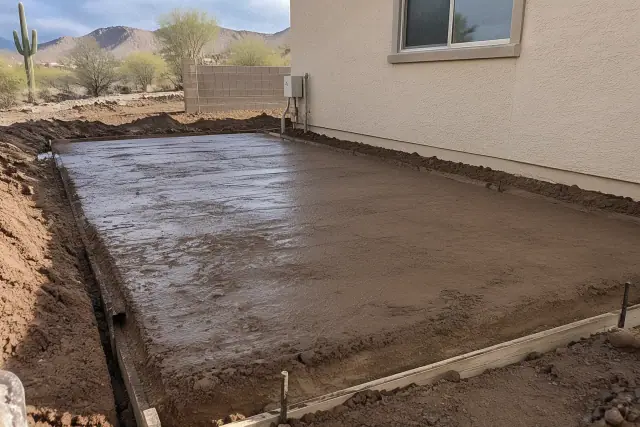
Compact earthen building pad for hydro excavation in Mesa, AZ, showing damp soil and a stucco wall.

Foundations and Building Pads

Foundation excavation follows the plan dimensions, while building pad preparation follows the engineer's finished elevations. We use GPS-guided excavation equipment for cut and fill work and coordinate footing preparation with the general contractor.

  • Footings cut to project dimensions
  • Exposure around utility stub-outs
  • Controlled digging beside installed conduit
  • Attention to nearby rebar cages
  • Building pads graded to specified elevations
Request Estimate
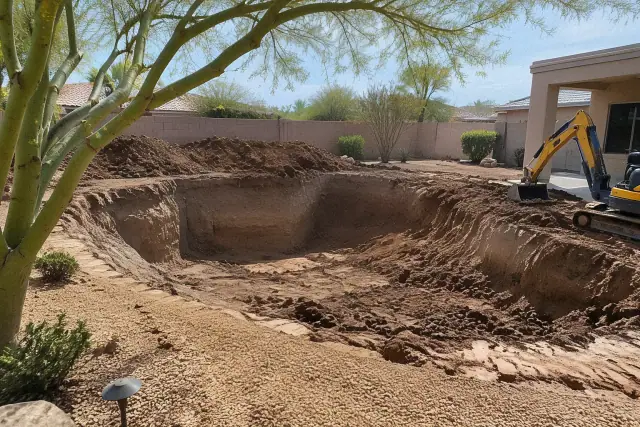
Contractor photo of pool excavation and removal at a residential property in Mesa, AZ.

Pool Excavation and Removal

Pool work requires a clear plan for the finished backyard. We excavate new pools to the contractor's specifications and handle partial or full pool demolition and removal according to the plans for the space.

  • Pool shape and depth set by the pool contractor
  • Excavation through expansive clay and caliche
  • Sidewall preparation for steel and gunite
  • Shell demolition and debris removal
  • Backfill, compaction, and yard grade restoration
Request Estimate
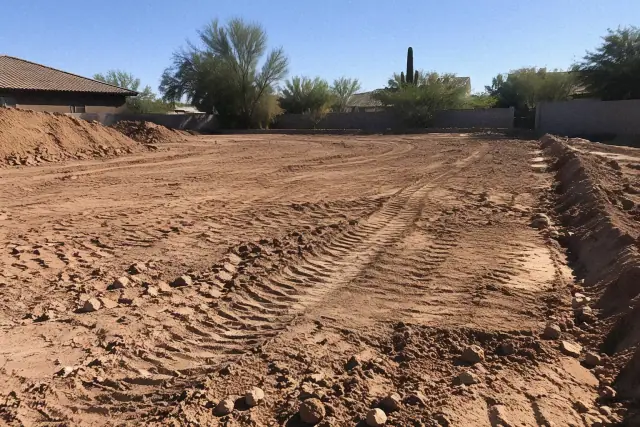
Land clearing, grading, and drainage work on caliche soil at a residential property in Mesa, AZ.

Land Clearing, Grading, and Drainage

We prepare desert lots for foundations, utilities, and paving by clearing material and establishing finished grades. Concrete demolition debris is hauled and disposed of in accordance with Arizona Department of Environmental Quality requirements.

  • Native vegetation, caliche outcrops, and old debris clearing
  • Old slab, driveway, and foundation removal
  • Dirt and rock hauling or relocation for fill reuse
  • Site grading to the project's finished specifications
  • Drainage and retention excavation for monsoon runoff
Request Estimate
Planning the Dig

Choosing Your Hydro Excavation Team

A useful excavation plan accounts for soil conditions, utility density, access, and the work that follows. Our crews bring hydrovac training, local site experience, and a defined safety process to those decisions.

Trained CDL Operators

Every hydrovac operator holds a commercial driver's license. Crews train in OSHA excavation standards, including trench shoring, atmospheric testing, and confined space protocols where applicable.

East Valley Site Experience

Our work across residential lots, commercial pads, and industrial sites gives crews familiarity with Maricopa County soil and utility conditions. That experience helps shape the approach to caliche, existing infrastructure, and restricted work areas.

Bonded and Insured Contractor

Mesa Excavation Co. is bonded and insured. Each job includes a site-specific safety plan, with work coordinated around City of Mesa permit and inspection requirements; crews stop and reassess when conditions change.

Local Digging Conditions

Solving Common Excavation Challenges

Utility uncertainty, difficult ground, and limited access can complicate a dig before the first trench is opened. We plan water excavation and spoil handling around the conditions below so the scope addresses the actual site.

Get a Free Estimate

Uncertain Utility Depth

Surface paint marks do not show the exact depth or position of a buried line. A two-inch gas line can be difficult to distinguish from surrounding soil during mechanical digging, so targeted potholes help confirm its location first.

Caliche and Rocky Hardpan

Hard caliche layers can slow excavation compared with looser fill soil. Adjusting water pressure to the ground conditions helps break up that material while keeping the exposure area controlled.

Crowded Utility Corridors

Gas, fiber optic, water, and electrical routes may occupy the same busy project area. A strike can lead to repairs and service outages, making deliberate exposure especially useful on industrial sites and along established utility corridors.

Tight Backyard Work Areas

Home additions and pool projects often share limited space with landscaping and buried services. Careful utility exposure helps define the dig before broader excavation begins in a confined residential work area.

Over-Digging Around Footings

Removing more soil than the plan requires adds backfill and compaction work. Precise excavation around footings, conduit, and utility stub-outs helps keep the opening aligned with the intended scope.

Water and Slurry Logistics

Hydro excavation needs water access and a plan for slurry disposal. Tank disposal distance affects production and cost, while extreme summer heat adds to water-use planning on Mesa projects.

From Locate to Handoff

Our Hydro Excavation Process

The dig progresses from utility identification to controlled exposure and an agreed handoff. We plan the work around the target utility or depth, the soil, and the requirements of the next construction phase.

01.

Request Locates and Mark the Site

We begin with an Arizona 811 utility locate request and site marking. The planned exposure areas guide where the crew needs to confirm utility position before excavation proceeds.

02.

Set the Site Safety Plan

The crew establishes a site-specific safety plan and addresses applicable trench safety, permit, and inspection requirements. Changing ground or utility conditions prompt a pause and reassessment.

03.

Calibrate Water Pressure

Operators match water pressure to the soil conditions and planned exposure. Caliche, rocky hardpan, and looser fill call for attention to how the ground responds as work begins.

04.

Loosen Soil with the Water Wand

A handheld wand breaks up soil in the target area. The operator works toward the required depth or utility with controlled excavation instead of removing a broad area with a bucket.

05.

Vacuum Slurry into the Tank

As water loosens the soil, the vacuum boom draws the slurry into the truck's debris tank. This collection happens alongside digging, helping keep the work area clear of loose spoils.

06.

Inspect and Prepare the Handoff

Once the utility or target depth is exposed, we inspect the area and document findings when required. The project scope determines whether the excavation is backfilled or left open for the next phase of work.

Plan Your Excavation

Request a Free Hydro Excavation Estimate

Tell us about the utility, foundation, or site work you are planning. Mesa Excavation Co. can review the digging scope, soil conditions, and spoil-handling needs for your Mesa or East Valley project.

Costs and Project Questions

Hydro Excavation FAQs

Find answers about hydrovac costs, equipment, operating requirements, and project planning. For questions about your site, call our team to discuss the work and request a free estimate.

Discuss Your Dig

Hydro excavation is slower than mechanical digging for large-volume earthwork because it focuses on precise removal. It also needs water access and a slurry disposal plan, which can complicate remote work. Extreme heat adds to water-use planning during Mesa summers. These tradeoffs matter when choosing equipment for the scope.

New hydrovac trucks generally cost from about $200,000 to over $600,000, depending on tank capacity, water system power, and vacuum strength. Hiring a contractor provides access to the truck and trained operators without buying the equipment. Mesa Excavation Co. maintains its own fleet for client projects.

Hydro excavation is typically billed hourly, with rates commonly ranging from around $325 to $625 per hour depending on truck size, crew, and site conditions. Small residential utility exposures tend toward the lower end, while complex commercial trenching can move toward the higher end. Depth, utility density, caliche, disposal distance, and job duration affect the total. Contact our team for a free excavation estimate based on your scope.

Elliot Road and Ellsworth Road sit within Mesa's broader Elliot Road Technology Corridor, associated with data center, advanced manufacturing, and industrial development. Individual projects change as permits are filed, so current City of Mesa planning records are the place to confirm approved work at that intersection. Utility density in this corridor makes careful excavation planning relevant to new construction.

Hydrovac operation is physically demanding and requires technical skill. Operators need to read soil conditions and utility markings, manage water pressure, and follow trench safety practices. Our operators hold commercial driver's licenses and train in OSHA excavation standards.

The process begins with an Arizona 811 locate request, site marking, and planning for safe excavation. Operators calibrate water pressure, loosen soil with the wand, and simultaneously vacuum slurry into the truck. After reaching the utility or target depth, crews inspect the area, document findings if required, and hand off or backfill according to the scope.

Contact Mesa Excavation Co. directly to ask about current openings. Hydrovac work calls for a CDL, mechanical aptitude, and a strong understanding of trench safety. Experience with vacuum truck equipment and high-pressure water controls is relevant to the role.

Locate markings identify where utility checks are needed, but they do not establish exact depth or position. Soft-dig test holes expose the lines so crews can confirm alignment before mechanical excavation. This helps reduce uncertainty along the planned trench route.

Pressurized water can break up caliche-heavy soil and rocky hardpan. Operators adjust pressure to conditions, and harder layers may take longer than loose fill. That extra digging time can affect the final cost of the project.

Hydrovac work can expose utilities around footings and stub-outs where installed conduit and rebar cages need attention. We also provide foundation excavation to plan dimensions and coordinate with the general contractor. The project determines where precision exposure fits into the broader excavation scope.

Yes, drainage and retention excavation is part of our broader excavation work. Mesa's monsoon storms make site drainage and retention capacity important to project planning. Our work follows the applicable Maricopa County Flood Control District and City of Mesa engineering standards.

The vacuum system pulls loosened soil and water into the truck's debris tank as digging proceeds. Slurry disposal needs to be planned for the site, and the disposal distance can affect the job. Keeping the material in the tank limits loose spoil piles beside the excavation.

Mesa Excavation Co. provides hydro excavation in Mesa and throughout the East Valley, including Tempe, Chandler, Gilbert, Queen Creek, and Apache Junction. We work on residential, commercial, and industrial sites. Contact us to discuss the scope and conditions at your property.