Half Needs an Explanation
A small job or substantial material order may justify a larger initial payment. For ordinary excavation, ask what must be paid before work starts instead of accepting half as an automatic requirement.
Mesa Excavation Co. uses milestone-based payment terms for grading, trenching, and pool excavation in Mesa, Arizona. Half up front is a large commitment for most excavation work, so compare the requested deposit with actual costs due before digging begins. A written breakdown helps you judge whether mobilization and material orders justify it.
A small job or substantial material order may justify a larger initial payment. For ordinary excavation, ask what must be paid before work starts instead of accepting half as an automatic requirement.
Ask for separate amounts for permits, equipment transport, fuel, and materials ordered in advance. Base rock or structural fill purchases give you something concrete to compare with the requested deposit.
Put each draw amount and the work that earns it in the contract. Separate the mobilization deposit from rough excavation and the final hauling, grading, and cleanup payment.
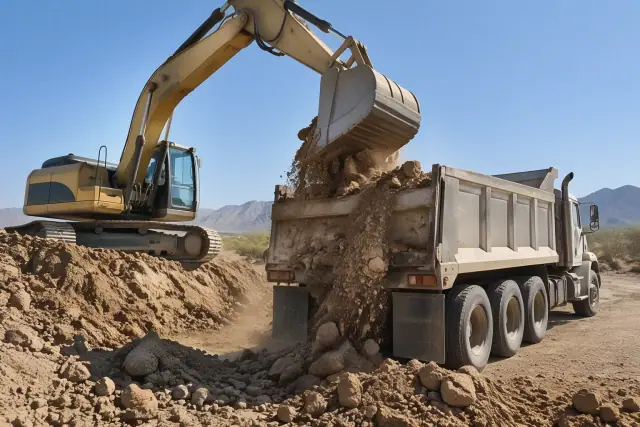
Getting equipment to the property is a real mobilization cost. Ask which machines and haul trucks the initial payment covers.
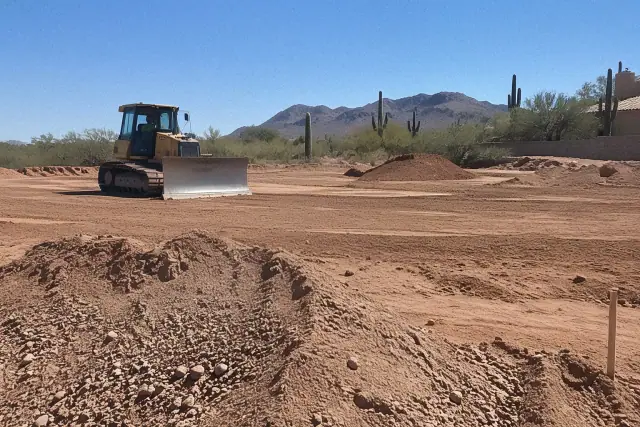
A structural fill order can explain a larger advance payment. Compare the material purchase with the itemized foundation excavation scope before agreeing.
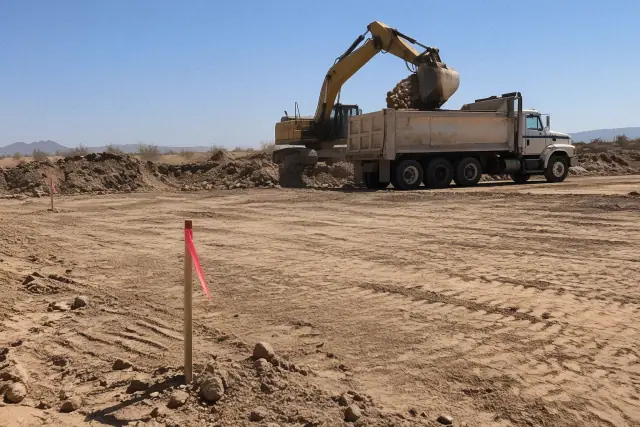
Final grade, debris removal, and site cleanup should match the agreed scope. Verify those completion items before releasing the final draw.
Confirm the written scope, contractor license details, and advance costs. For utility trenching, coordinate Arizona 811 locates before digging begins.
Tie the progress draw to the excavation stage described in the contract. Soil removal and rough grading should have clear completion points.
For foundation pads, include compaction testing and pad certification in the milestones. Trenching completion should account for backfill and compaction to the specified requirements.
Verify the agreed hauling, final grading, and cleanup. Question a demand for the full balance while those completion items remain unfinished.
Use the scope and actual advance costs to assess the request. A deposit percentage alone does not establish whether the payment schedule is reasonable.
| Excavation scope or request | Typical deposit or early draws | What to confirm before paying |
|---|---|---|
| Grading and site preparation | Typically 10-20% | Equipment mobilization and any required dust-control permitting; identify materials ordered in advance. |
| Larger, multi-phase foundation-pad or pool excavation | May run closer to 25-30%, split across draws | Separate the initial mobilization payment from subsequent draws tied to completed excavation stages. |
| Residential excavation in Mesa | Typically 10-25% | Explain adjustments for lot access, soil conditions, and haul distance to disposal sites. |
| A request for half before work begins | 50%; high for most excavation work | Ask whether a small scope or substantial advance material purchases justify it in writing; otherwise discuss a smaller deposit and phased payments. |
Arizona's contract requirements for jobs over $1,000 include the contractor's license number, work description, advance deposit, and progress payments tied to stages of construction. Do not apply California's usual home-improvement deposit cap of 10% or $1,000, whichever is less, to a Mesa contract. Get an itemized explanation of money due before work and define when each remaining draw is earned. Our excavation schedule starts with mobilization, moves to rough excavation, and ends after hauling, grading, and cleanup are verified.
Dense caliche can add rock-breaking equipment time to pool excavation, while grading costs depend on cubic yards and equipment hours. Clearing desert lots in Eastmark or near Signal Butte can involve debris disposal fees in the initial draw. Site preparation may also require dust-control permitting: Maricopa County requires a permit for dust-generating operations disturbing 0.1 acre or more. Lot access and haul distance affect the equipment and trucking committed to a residential job. For drainage or retention-basin excavation, payment stages should follow the applicable design approvals and grading milestones.
Can I negotiate a request for half up front? Yes. On a $6,000-$20,000 grading or trenching quote, ask which material orders or mobilization costs justify that draw, then discuss a smaller deposit and payments as work is completed. Does a smaller deposit prove a contractor is reliable? No. Check Arizona Registrar of Contractors license history, ask for proof of insurance and recent local references, and question cash-only demands or vague verbal scopes. When should I pay the balance? Use the written completion milestones, including final grade, hauling, cleanup, and any required compaction testing.
Share the property location and whether you need grading, trenching, pool excavation, or foundation preparation. We can discuss the scope, costs due before mobilization, and payment milestones so you understand each draw before approving work.